Thursday, January 9, 2020

Bogota

The national shield of Colombia

Our plane from Dallas arrived in Bogota after midnight with a  short delay due to a disabled plane on one runway.  We heard later from friends who arrived a few days before that one runway was closed unbeknownst to the airline, so we’re not sure what the real story is!  We were asked no questions at customs and gathered our luggage and steeled ourselves for the scrum of drivers outside baggage claim heading right past them to an official taxi line.  Our taxi was a bit worse for wear and the driver took any bumps in the road with extreme care.  Then about 10 minutes into the ride he said he had a flat tire.  We were sure this was going to turn into a scam, but at the first open gas station he pulled right up to an air hose and filled two of the tires.  It still seemed pretty iffy that we were going to get to the hotel in his cab, but we made it.  The other odd feature of cabs is that the meter shows the distance, but not the fare.  The driver looks up the fare on a table based on the distance.  You can ask to see the table if you want to make sure you aren’t being overcharged.  We’ve also had trouble getting used to translating from pesos to dollars because the exchange rate is about 3300 pesos to the dollar. 

Our hotel is in the the Zona Rosa, one of the upscale parts of the city that features lots of fancy name brand stores, like the Kitchen Aid store and a BMW dealership.   The mall across the street from our hotel has private security people with dogs that sniff every bag being brought into the mall.  The friendlier looking golden retrievers get lots of pats from kids.  They seem to stay away from the muzzled rottweilers and German shepherds. The street in front of the hotel is torn up, but construction isn’t that loud because a lot of the work is being done by hand.  If all you saw was this part of Bogota you would think the whole city was undergoing a construction boom and very wealthy.  In fact the paper this morning had an article about how desirable Colombia is for foreign investment.

Zona Rosa

Plaza in front of the cathedral

Houses in Candelaria

Many of the people asking for money on the streets are from Venezuela.  They are often selling black plastic trash bags as a trade for your charity and most are families with children.  A couple women were selling pouches woven from now worthless Venezuelan currency.  The paper is very strong even if the bolivar is weak!

Our first morning we walked a few blocks before finding a place for coffee and a pastry. It was one of what turns out to be a local chain, Tostao, and was pretty good.  Nothing like starting out vacation with a Nutella filled croissant sitting outside in the sun!  Bogota is at 8900 feet and the sun is strong but the air is reasonably cool.  After breakfast we attempted to use our phones to get an Uber, but couldn’t get the app to work. Friends with iPhones have had no issues using Uber. The hotel had given us the number for their transportation coordinator, so we called her and she arranged a cab for us.  But when she tried to call us back to tell us the name of the driver and license number to watch for she couldn’t reach us.  She actually walked over from the hotel to the corner we were waiting on to let us know this and to call for another cab while she waited with us.  The hotel cabs are white instead of yellow and tend to be more comfortable cars in our limited experience.  The driver took a route along the hills bordering the eastern edge of the city.  This is the area where the politicians and upper level military officials live he said.  Tall apartment buildings with views over the city.  We wound our way down to the Candelaria district, one of the oldest parts of town.  He dropped us off at the gold museum with partial directions to a café a few blocks away and instructions to only ask security guards and police officers for directions. 

We decided we needed some lunch before visiting the museum but found a good looking Colombian -Caribbean place before the place our driver recommended.  It was on the early side for lunch and we were the first customers of the day.  The staff gave us recommendations for their best dishes and while our food was being prepared Jake had an expresso and I had a refreshing lemonade with ginger.  We shared a delicious plate of grilled vegetables and octopus and a sort of pot roast cooked in panela (sugar cane extract) and tamarind juice served with a slightly sweet coconut rice.  The restaurant was situated on a street where nearly every other business was a jewelry store selling emeralds.  Out of curiosity I asked the price of a gold ring set with a small emerald of a nice clear green color and was told it was about $1000.  Guess I’m not getting an emerald ring any time soon!
The gold museum had wonderful examples of gold figurines and ornaments from different eras and parts of Colombia as well as explanations of the metallurgy involved.  They did not discuss the after effects on the environment of mining unless I missed something.  They did have an interesting exhibit on the cultural importance of gold to different Colombian cultures.

We strolled around Candelaria some after taking in the museum and uneventfully caught a yellow cab from the Gold museum back to our hotel.   After a short nap we headed out again to meet friends from Santa Fe for dinner.  They are studying Spanish for a week and had rented a beautiful AirBnB apartment in the Zona G (the gourmet district) near one of the universities and a 20 minute walk to their school.  We got a tour of their apartment and caught up over appetizers before walking to dinner at an elegant Spanish restaurant.  The waiter was from Galicia and somewhat dismissive of Colombian seafood saying that they import nearly all their seafood from Spain to maintain quality!  Their octopus was no better than what we had at lunch but I didn’t ask where the lunch octopi were from.  The food we ordered was quite good though especially the grilled vegetables and marinated mussels.  This elegant dinner with two of us ordering wine set us back $80 for the four of us.  Our friends ordered an Uber for us to take back to our hotel as the busy day and lack of sleep the night before was catching up to us!  We hope to meet up with them again when we overlap in Cartagena.
On our walk to the Zona G the night before we came across the very pleasant Calle 9 and headed there for breakfast.  We chose a place called Masa that had a nice variety of breakfast options.  I went with an acai bowl with granola, strawberries, blueberries and chia seeds and we shared a chocolate croissant. Later in the afternoon we had lunch at the French restaurant Bagatelle, just a block from Masa.

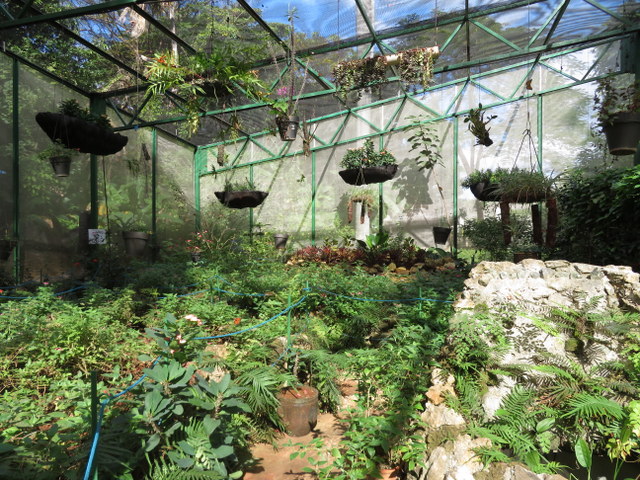
We opted to let the hotel arrange transport for us to the botanical garden in the morning and one of the staff escorted us down the street to our taxi.  It turned out to be almost a half hour drive to the garden with the traffic.  We arranged to meet our driver where he dropped us off in two hours.  The garden is hosting a big light show with figures of endangered animals in Colombia.  The figures look good during the day too.  We started out in the part of the garden that wasn’t included in the light show and I got to know a few Colombian plants.  The part with the light show had roped off much of the garden, but we were at least able to walk through on the main paths.  The garden has some interesting projects like labeling all the urban trees in Bogota with an app so that you can look them up.  At the garden, and really all over Bogota, there seems to be a big effort to recycle and reduce use of disposable materials.  Carteros (people pulling carts) sort out recyclables to take to central locations.  There is very little trash on the streets.  The garden had a big composting and gasification facility for its green waste. 
Colombian fuschia

Huge yucca flower!

Herbarium building

giant hermit crabs

Id sign on a downtown tree

Dinner tonight was at the food court of the Andino mall up on the 4th level.  We opted for Italian.  Perfectly adequate given that we were not particularly hungry and tired of walking!  It was like any food court in the US I would say.

Monday, January 14, 2019

Havana - Sightseeing


First of all, I was really impressed with how safe Havana felt.  There are apparently very few incidences of assault and relatively little pickpocketing.  There were also remarkably few if any children selling things or begging or even adults begging.  Plenty of people would try to con you in some small way, but they were easy to avoid if you know what the potential “scams” are (getting you to go to certain restaurants, offering to be a guide, finding you a taxi, selling sets of CUP coins).  I was a little wary of taking photos having read that you should not take photos of police officers, soldiers, or military buildings and not being entirely sure what else might be sensitive.

 Havana is divided into many neighborhoods.  Old Havana is what most tourists see and where the cruise ships land.  It has been fixed up pretty nicely and has lots of sights to see.  Just to the east lies Central Havana.  A lot of Cubans live in Central Havana and it has not been fixed up for the most part.  The streets are narrow and the buildings in varying conditions but mostly decaying.  You get a sense walking through of how a lot of people really live in Havana.  The next neighborhood to the east is Vedado where we were staying.  This area was developed starting in the 1850s and was always a more upscale residential neighborhood through the 1950s when it was a favorite area for American gangsters who developed casinos and hotels in the area.  After the revolution many of the big mansions were divided into housing for many families.  Now some are being renovated again.  The eastern border of Vedado is the Almendares river and to the east of that is the Playa/Miramar area.  This area has lots of embassies and more modern homes as well as older mansions.  There are many other parts of Havana too that we did not visit.
Callejon de Hamel in central Havana, due to the efforts of one artist it's now a popular tourist destination with several small cafes.


Perhaps my favorite place was Quinta de los Molinos, a former tobacco processing place turned botanic garden and animal sanctuary.  It is near the Universidad de Havana off Calle Allende.  I was the only person for the 10 am guided tour and my young guide, though having studied electronics in school, was well versed in natural history.   He told me about many of Cuba’s endemic trees and well known introduced trees like the breadfruit tree.  The garden holds programs for special needs kids and is funded mostly through private foundations.  The garden has a spay/neuter program for dogs and cats and takes in some donated animals.  They had a number of peacocks, chickens, doves, and turkeys, parrots and rabbits, a pair of South American tortoises and small aquatic turtle similar to a snapping turtle.  Some of the animals are used for “zootherapy”.    They also raise some vegetables for a local school.  They have a large new butterfly enclosure for which they raise monarchs among other butterflies.  They also breed one of Cuba’s endangered snails for reintroduction.  And they have an outdoor bonsai collection.  Two families live in the garden and are there because several generations ago they worked as gardeners.  I would guess that during the Revolution they just stayed on and got title to some of the land.
Flower of the cannonball tree, a very curious tree in the same family as the Brazil nut.
https://www.nybg.org/blogs/plant-talk/2013/01/science/the-cannon-ball-tree/

Palma corcho, Microcycas calocoma, endemic to Cuba

butterfly house at Quinta de los Molinos

Danaus eresimus I think, related to the monarch

Siamese with attitude

We visited the Museo de Artes Decorativos (Museum of Decorative Arts) not far from our place in Vedado.  Somehow this mansion seemed to have escaped division and retains many of its ornate detailing.  Many of the objects on display were found hidden in the basement behind walls.  
The dining room at the Museum of Decorative Arts

Art Noveau stacking tables and chairs

In Old Havana we toured the Ceramics Museum.  It has 2 floors of mostly modern sculptural ceramics that were quite interesting. 
Ceramic "herbarium"


Angel of music at the Ceramics museum
Also the Natural History Museum by Plaza de Armas. It focuses on Evolution and animals and has displays of stuffed Cuban animals.  Apparently during the summer they offer tours of the natural history of the city which would have been interesting I think. 
Giant sloth skeleton

Cuba has many bat species

The Museo de la Revolución is worth a visit if only to take in the Cuban Government’s point of view.  It is located in the former Presidential Palace, never used after the Revolution.  All of the battles leading up to the triumphant march into Havana on Jan. 8th are discussed in detail as are Cold War incidents like the Bay of Pigs. The CIA is discussed fairly extensively and is blamed for assassinations, distribution of propaganda that resulted in parents sending their children to the US to be adopted by strangers, introduction of swine flu, introduction of crop diseases, and insults.   You can see mementos from all the heroes of the Revolution including Fidel and Ché.  The improvements to education, agriculture and health care post-Revolution are documented from 1959 - 1990.  Cuba’s assistance to other countries like Angola and Venezuela are also discussed. There was no information on the last decade.
Not at the Museum, but the poles are part of the Anti-imperialist plaza in front of the American embassy 

A revolutionary's guitar and Che at the Museum of the Revolution

Fragments of an American plane and the type of missile used to shoot it down

Parque Almendares was somewhat disappointing.  This last remnant of “natural forest” within the city seems to be overrun by vines and heavily used for Santeria practices like sacrificing chickens and burning flowers in circles of chalk.  Apparently Santeria has had a resurgence in popularity and we saw quite a few novices clad all in white. They are supposed to wear only white for the first year of their novitiate.
Vine covered trees at Parque Almendares

Remains of a sacrificial chicken

The forts opposite the bay from Old Havana are imposing, but not so interesting up close.  Maybe a guided tour would have helped.  It cost 10 CUC for a taxi each way too.  They have a cannon firing ceremony every night at 9pm apparently.  You do get nice views of the city from the forts.

Cemeterio de Colon is a huge cemetery filled with a fantastic number of carved marble statues and sarcophagi.  In lesser visited parts of the cemetery workers were shoveling out areas with broken marble pieces.  A number of important people are buried there if you want to see where important people are buried.  We passed through on a long walk to Playa.
Cemeterio Colon


Havana - Restaurants and Food


I mentioned earlier that we had planned to fix some of our own food, but were warned by our hostess that it can be very hard to find the food you want to eat.   It is easy to find your basic fruits and vegetables at markets scattered around town.  Meat can be a little harder.  All cows are owned by the government and there seem not to be enough of them to provide meat.  Ropa vieja, traditionally beef, is increasingly being made from lamb for instance.  Ropa vieja is slow cooked, shredded meat.  Farmers still look after the cows, but if a cow dies on your farm, there is a significant investigation into cause of death and a big fine or even jail if you are found liable in the cow’s death.  We were told by several people that you get off easier killing a person than killing a cow.  Pork can be grown privately and seemed relatively available, but you have to know where you’re buying it from in terms of how sanitary it is.  Chickens are sold in separate stores.  Eggs were in short supply while we were there, although one day we saw lots of people carrying a flat of 2 dozen eggs away from a house down the street and our hostess had purchased 30 eggs in anticipation of our arrival.  Some of the “supermercados” had rice, beans and sugar for sale in big sacks but little else.  I mean we’re talking a big store with a few bottles of vinegar and a couple cans on the shelves and then these big sacks that would feed two people for several months.  There was one small store in the neighborhood that always had a line of people and it looked like you might be able to buy some dried pasta, soap, and cooking oil there.

Maria fixed us breakfast every morning.  Café con leche or tea. Always a plate of fresh fruit (pineapple, bananas and papaya (called bomba in Cuba because “papaya” is a salacious slang word) and either guava or pineapple juice.  Usually a sweet bread or pastry.  Eggs scrambled or fried, cheese slices, sometimes some ham, and whole wheat rolls or French bread slices with butter and jam.  We got tired of eggs after a few days and skipped them for a couple mornings.   On our last night Yanelis and Maria fixed dinner for us.  They made bruschetta with tomato and arugula, chicken barbacoa slow cooked in soy sauce and beer, boiled potatos, and pasta with a tomato tuna sauce.  Maria’s husband Eric went out to get a bottle of Cuban made red wine.  With ice it wasn’t too bad.  Speaking of ice, not even most Cubans drink the tap water.  Most of them boil and then filter the water or buy bottled water.  At the restaurants that tourists are likely to eat at they all seem to make ice from bottled or filtered water.  We usually bought bottled water at restaurants or stores that seemed to sell a lot of beverages because some street vendors have been known to refill water bottles and make them look sealed.  We did sometimes buy sodas in cans from street vendors though.  Each room at the house had a small refrigerator stocked with bottles of water and soda.

Two doors down from our house was a great “paladar”, private restaurant, called Grados (Calle E between 23 and 25).  You could sit on the porch screened from the street by tropical potted plants or just indoors.  They make their own focaccia and somehow smoke it to lend a different flavor.  We ate there twice.  They had a great lamb dish slow cooked in a sauce made from Puye, a sort of herbal drink made in another region of Cuba.  Jake had pork both times cooked in different ways but always tender and flavorful.   I had a small swordfish steak another night served with yucca and a delicately flavored white sauce.  Jake had their take on Callaloo, a Caribbean soup.  It had some greens wrapped around goat cheese over which they poured a light broth.  Another appetizer featured a polenta-like base with greens and tiny poached eggs.  And they make a great mojito!


The Farm to Table tour took us from the Mediterraneo Havana restaurant  (Calle 13 between F and G) to the Rancho Vista Hermosa in Guanabacoa, about a 25 minute drive east of Havana.  Mediterraneo may be the only farm to table restaurant in Havana or was at least the first. The farm grows all kinds of things and raises all kinds of animals.  They now also have a facility to make cheese and process meat and a restaurant on site for groups.  Private farms can only have a maximum acreage of 165 acres.  This one reminded me of what I’ve read about Polyface farm in VA.  Pigs, chickens, geese and guinea hens ranged around the farm and ate weeds from under the mango, guava, banana and other fruit trees.  Rabbits lived in pens raised over a dirt floor where guinea pigs cleaned up after them (they do not eat the guinea pigs).  The farm makes a fodder out of a mix of white mulberry, sugar cane stalks, sweet potato vines, and king grass (a species of Pennisetum?).  It has a big shade house for growing greens and herbs.  German shepherds guard the animals at night – mostly from poachers and people practicing Santeria apparently.  They grow 17 varieties of sugar cane for different purposes.  Tilapia and some other fish grow in a spring fed pond and blue-clawed crayfish are grown in cement tanks.
Hauling sugar cane stalks

Guava, pineapple and sugar cane

Livestock guard dog, hopefully more alert at night

Food scraps to feed pigs and chickens

The rabbit area with guinea pig cleanup crew

A field of greens for fodder, white mulberry shown here

Vegetables in the shade tent

orchid

horseback ride to an overlook on the farm

Cows in the road

Looking back over the farm

Cows with their egrets

Making sugar cane juice

Our guide Kensys led us around the farm and introduced us to some of the 25 people who work there.  He also joined us for lunch back at the restaurant in Havana. We ate on the second floor terrace as the downstairs was occupied by a tour group, but the terrace is really pleasant.  We started by sampling three of the cheeses and the cured ham and sausage made at the farm (and a mojito for me and Kensys).  This was followed by ravioli stuffed with the farm’s goat’s milk mozzarella served with a tomato sauce made from fresh tomatos.  The main course was a grilled skewer of pork, chicken, bacon and pork sausage with peppers and onions.  Dessert was homemade vanilla ice cream served with the farm’s honey.  The chef is Italian and invested in the cheese production aspect of the farm.
The third paladar we ate at in Vedado is Idilio (Calle 15, corner of Av. Presidente).  They serve a lot of seafood dishes.  We ordered an appetizer of piquillo peppers stuffed with tuna or salmon.  I also got a cocktail made with aguardiente and honey that Yanelis had recommended, very drinkable. The peppers seemed like they were probably out of a jar rather than fresh and stuffing has a little too much like tuna with mayo, but the salmon stuffing was better with some dried fruit added in.  The main courses were quite good.  Jake got grilled mixed seafood that included a spiny lobster tail, a piece of swordfish and some small shrimp.  I ordered the mariscos enchilada which was shrimp and lobster pieces in a tasty tomato based sauce.  These came with arroz morro (rice mixed with black beans) and I got a side dish of fried plantains that turned out to be very thin slices cooked to be crispy.  The restaurant’s tables are under a covered patio with pretty blue-checked tablecloths. 
Other places we ate were somewhat hit or miss, but a few to recommend:

Topoly – an Iranian restaurant on the corner of 23rd and Calle D.  We took a couple afternoon breaks on their pleasant porch screened from the street by a bubbling fountain and plants.  They had an interesting tea frappe, good coffee, baba ganoush, or desserts like flan and cake roll for something sweet.
A snack at Topoly

Café Cuatro Lunas  - Calle I between 23 and 25.  The most beautifully decorated daiquiri with a rose petal on top and a curled lime rind garnish.  Inexpensive typical Cuban food.  Really friendly servers and a pretty room with big windows.  They also serve breakfast.

MekedÉ – Old Havana near the Museum of the Revolution, Monseratte 211.  Good place for a drink or lunch.  We just got bruschetta and lemonade there but they were really good.
Esto no es un Café – Callejon del Chorro off of Plaza de la Catedral, Old Havana.  This little alley is known for its selction of Paladars and this one just seemed a good spot to us.  We shared a bowl of ratatouille and roast chicken with vegetables.  Good for big servings of cooked vegetables!
Record placemats at Mekede

La Fortuna – in Playa on First Avenue.  Quirky décor inside (you can sit in a VW bug or on a buggy or lie in a bathtub) and a small deck with a view of the Ocean.  An enormous chicken, gouda and olive sub for 5 CUC.  Cute male servers wearing sailor’s outfits.
The view from La Fortuna


Cuba - The Second Economy


First a quick explanation about Cuban currency.  There are pesos convertibles (CUC) and national pesos (CUP).  One CUC is worth 25 CUP.  Most Cubans are paid in CUP but tourists mainly use CUC.  Either currency is accepted for the most part.
Convertible (CUC) pesos and national pesos (CUP)

Our first excursion was with Jorge, a “Tour with an Economist”.  We met Jorge at a park near our house along with two other older couples from Boston who were traveling together and a couple from England that are on a 10 year round the world camper trip (see https://thisbigroadtrip.com/)!  They did not bring their camper to Cuba.  Jorge and his friend (also named Jorge) are both trained as economists, but never practiced.  About 80% of Cubans are employed by the government, but government salaries average 30CUC/month.  A beer costs 1 CUC, dinner for two at a nice restaurant, 30 CUC.  Not that you can’t get a pizza and soda at a government restaurant for about 1 CUC. But basically you can’t live off the average government salary so everyone has “la busqueda”, the search, for other ways to earn money.  The Jorges are getting in 2 economic excursions a day plus another all day excursion to the family farm outside of Havana 2 days a week through AirBnB and even with fees paid to AirBnB, transfers of money from a Miami-based company to a Cuban bank account, and government taxes, they could probably make 30 CUC a day if they have several people on each tour.  On the other hand, they have other people that help with the tour that they pay money to as well.
For our tour, the first step was taking a public bus.  I have never been on a bus or subway where I felt more like a sardine than on this bus. Even a sardine would have more space I think. Fortunately the ride was only about 5 minutes.  Bus rides cost about 0.40 CUP.  When we got off the bus Jorge explained about people who can find things.  These are the people who know how to get things not generally available at a store.  For example, can’t find a mattress, ask a guy hanging out in front of a  store and he can take you to another guy who has a bunch of mattresses.  Where do these come from?  Well,  maybe someone who works at the state mattress factory declares some mattresses to be “defective”.  Another guy is paid off to not notice that the mattresses didn’t get destroyed  but were instead loaded into a truck.  Then you might also need to pay someone to gather receipts that weren’t collected by a buyer and one of those receipts becomes yours to show you “legally” bought the item.  People sell all kinds of things out of little storefronts or just sitting along a shopping street.  Like in Russia, if you see a line in front of a store, get in it, because someone must be selling something you need.  Jake spent more time than I did exploring exactly what people were selling and for how much.  We stopped for juice at a stand where juice costs 2 CUP, rather than the 2 CUC we had paid earlier in the day at a restaurant in the tourist area. 

The tour ended at Granma’s house.  She was probably in her 70s and had lived in Old Havana.  After the Revolution their apartment building was condemned and torn down and they were sent to live in a shelter, for 20 years. The shelter was like a big warehouse with partitions for your living space.  Shared bathrooms and kitchen.  She said she knocked on a lot of doors trying to get compensation and a new place to live.  Eventually she was given the opportunity to buy an apartment at a subsidized rate with money deducted from her husband’s paycheck.  She and her husband are divorced now, but they continue to live in the apartment together.  I asked why she had three refrigerators and she said 2 were hers and one was her husband’s.  She gets a pension of about 10 CUC a month and supplements this by baking croquetas for parties, mending and altering clothing, and of course hosting the people on these tours.  She provided rum and cokes (Cuba libres, the coke being the national brand, not CocaCola) and crackers with a mayonnaise spread.

Many goods are “seasonal”.  Sometimes literally only available during certain seasons, but more often just meaning a temporary shortage.  When we were there, there was a shortage of flour for instance.  Brazil has elected a new right wing president and most flour importation comes from Brazil.  The Cuban government disapproves of the new Brazilian government and now Cuba gets no flour from Brazil.  Yanelis had a big water purifier in her home, but she can’t find filters for it right now even though the thing was produced in Cuba.

Our other tour was a “farm to table” tour.  I’ll talk more about the farm in a post on food, but our guide for that tour was trained as a lawyer but has spent most of his career working for tour companies.  Our driver was a mechanical engineer and he does some consulting work for an Italian company, works some with a government agency, and does the marketing for the farm to table tour.  One of our cab drivers is a physical therapist but just bought a 1958 car that he is going to fix up to drive people around.  Maria’s husband worked as a gardener at the national botanical garden for a number of years but the salary was too low and now he has a license to operate a cart from which he sells crackers and apparently he makes more money doing that than as a gardener. 

The fact that you can’t make a decent living as a professional despite a free education system has meant that many people are forgoing college now to work in the private service industry instead.  Cuba has been exporting doctors and doctors who agree to work abroad basically get a bonus paid for by the other country.  Brazil had several thousand Cuban doctors, but the new government wanted to pay the doctors directly rather than pay the Cuban government, and so Cuba has withdrawn all those doctors. 
A typical street in Central Havana

Parks are wifi hot spots and so everyone goes there to check their messages. You purchase wifi access on a card purchased from the government via street kiosks mostly.

Revitalization continues from Old Havana into Centro along a pedestrian only street

A receipt showing the price in CUC vs CUP

Along the Malecon looking towards Central Havana

School kids on their lunch break

If you do earn more than $2000 CUC a year in a private business you have to declare that income and it is taxed at 50%.  Hmm, wonder how many people declare that cash income they are receiving?  There are though still “spies” in every neighborhood who might report an increase in spending on goods or major home repair or speaking out against government policies.  Many of these people have themselves been caught doing something illegal and reporting on others keeps them out of jail.

Cuba - an Introduction


I left our winter vacation up to Jake who decided to take the more adventurous option of a week in Cuba, a place we had wanted to go for some time.  It’s pretty easy now for Americans to go to Cuba.  You can fly direct from the US on one of several airlines.  The airline ticket fee generally includes the medical coverage you need to get into Cuba and the exit tax fee.  You can request a visa by email which arrives as a blank form that you fill in with your name and passport number.  Or you can get one at the airport the day you fly.  At the airport you get the visa stamped at a booth located at your gate.  Jake booked a place to stay through AirBnB as well as two excursions.  For the US government you have to say why you are going to Cuba.  “Support of the Cuban People” is what most people use.  We chose “Research”.   Jake planned to research intellectual property, specifically trademark use, and I planned to investigate sustainable landscaping practices.

We flew American Airlines from DCA to Miami, Miami to Havana.  Everything was on time until just short of Cuba the airplane began circling.  Our flight didn’t have permission to land in Cuba because the flight number wasn’t registered.  The plane had enough fuel to circle during a 15 minute negotiation session between AA and Cuban authorities, but that wasn’t enough time and we flew back to Miami to refuel.  Fortunately, by the time we landed in Miami our flight was cleared for Cuba.  The flight attendants had just enough time to give everyone a sandwich before we landed back in Cuba. 

The next hurdle, for Jake anyway was clearing Cuban customs.  We went through one at a time and I was cleared quickly.  They just enter your passport number in their computer and take your photo.  When Jake’s passport number was entered though I could see “Controlado” flashing in red on the computer screen.  He was ordered to step back and an official took his passport off to a side office.  After awhile a young guy came back with the passport and asked him a bunch of questions.  He got through!  Whew.  Passed our bags through an Xray machine staffed by Cuba’s TSA equivalent I guess but they were all young women wearing short uniform skirts and black net stockings with different patterns.  Next you hand your Sanitary certificate saying you don’t have a cold or other transmittable disease to women dressed in white nurses uniforms.  Then your customs declaration form and you are out in the airport lounge.

We changed some Canadian dollars at an ATM sort of machine and got back Cuban convertible pesos (CUC).  Cabs wait outside the airport and cost about 30 CUC for a ride into the city.  It’s about a 30 minute ride.  The driver pointed out various landmarks and gave us his card in case we wanted to call for another ride somewhere.  Our AirBnB host was waiting for us at the gate to the house.   The house is owned by a Cuban-Italian couple.  Yanelis grew up in Cuba but lived in Italy for 25 years.  She and her Italian husband purchased and started remodeling this house five years ago.  It’s only been open as an AirBnB for a year or so.  There’s a lovely shaded porch to sit on out front and a formal sitting area.  There are 3 large bedrooms each with a bath along a corridor.  At the back is the kitchen/dining/sitting area and another bedroom where the owners stay.  Yanelis’ cousin Maria does all the cleaning and will make breakfast for 5 CUC/person.  We had intended to make our own meals, but finding food in stores in Cuba can be challenging and we ended up having Maria make us breakfast and eating out most of the time.
Jake on the front patio of Casa Yaya, our Airbnb

View down the corridor

Moqui, the dog

Maria and Yanelis